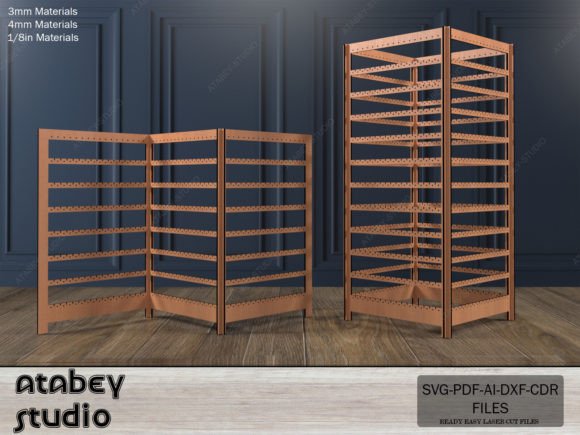
Laser Cutting Stands: Keychain Display Review
As a graphic designer who frequently bridges the gap between digital branding and physical product execution, my first impression of the Laser Cut Keychain Display Stand Files was one of immediate practical utility. In an era where handmade businesses and boutique brands are striving for shelf presence that rivals big-box retailers, the unboxing experience and in-store display are critical touchpoints. This asset isn't just a collection of vectors; it is a structural solution for small business branding. The visual mood it creates is one of organized professionalism. It suggests a brand that cares about details, transforming a loose collection of merchandise into a curated product line. For clients running Etsy shops or attending local craft fairs, this type of graphic design asset elevates the perceived value of their goods instantly.
Structural Integrity and Material Compatibility
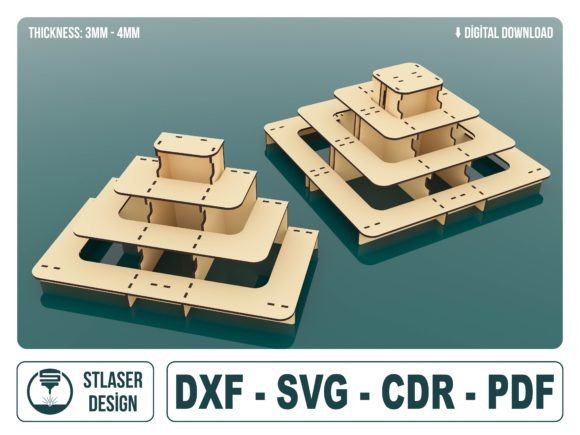
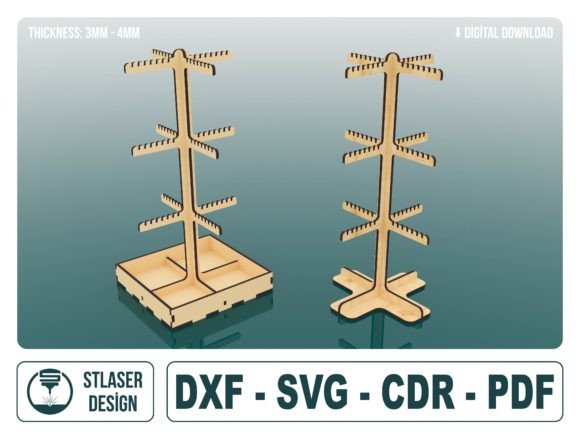
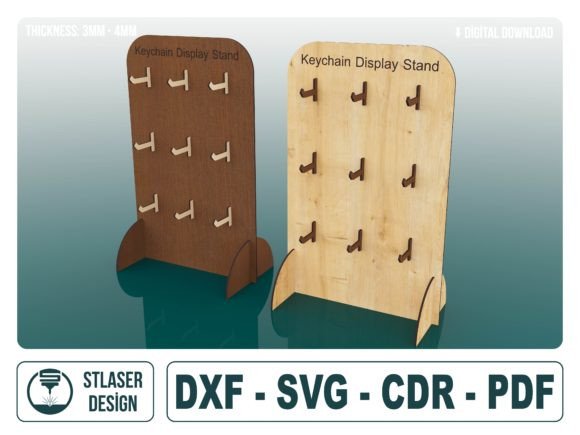
When reviewing files for real client projects, technical specifications are non-negotiable. These files were explicitly engineered for 3mm to 4mm material thickness, which is the industry standard for high-quality acrylics, plywood, and MDF used in retail environments. The dimensions—approximately 250x150x400mm (or 9.8"x5.9"x15.7")—offer a substantial footprint without being cumbersome. This scale is ideal for countertop displays in boutiques or trade show booths. From a Laser Cutting perspective, the precision required here is paramount. A poorly optimized file can lead to burnt edges or joints that don't snap together cleanly. However, this design bundle appears to account for kerf and assembly logic, making it a reliable choice for production.
The availability of the drawing in both DXF Drawing Interchange Format and SVG Scalable Vector Graphics is a significant advantage. As designers, we often need to tweak anchor points or adjust slot widths depending on the specific material batch we are using. Having access to editable vectors means we can adapt the Stands to fit unique branding requirements, such as integrating a logo cutout directly into the base or modifying the tier heights for specific product sizes.
Integrating Physical Displays into Brand Identity
The true power of this asset lies in how it supports a broader brand identity. Imagine a client launching a new line of enamel pins or custom keychains. Without a proper display, these items often get lost in a cluttered bin. By utilizing these Laser Cut Keychain Display Stand Files, the designer can create a cohesive visual narrative. The stand acts as a frame, directing the customer's eye and creating a visual hierarchy that highlights the best-selling items. This is crucial for marketing visuals and product mockups. When photographing products for social media graphics or website banners, a structured stand provides a clean, professional background that enhances the modern design aesthetic of the photos.
This asset performs exceptionally well in scenarios requiring themed collections. Whether it is a seasonal campaign for holidays or a limited-edition drop, the stand provides a consistent platform. It works beautifully alongside other design assets like packaging design and labels. For instance, if a brand uses kraft paper packaging, a wooden version of this stand reinforces the eco-friendly, handmade business vibe. Conversely, an acrylic version paired with metallic foil stickers creates a sleek, high-end luxury feel. The versatility allows it to fit seamlessly into various creative design directions.
Strategic Application in Commercial Design
In terms of where this asset shines, it is unbeatable for large layout areas and hero graphics in physical retail spaces. It serves as a decorative accent that doubles as functional furniture for products. It is particularly effective for print-on-demand sellers who need to showcase their wares at pop-up markets. The structure supports editorial design principles by organizing space and reducing visual noise. However, designers must exercise caution. This is not an asset for minimalist branding where the focus is solely on white space, nor is it suitable for projects requiring very clean visual hierarchy in a digital-only context. It is a physical tool, and its impact is tied to tangible interaction.
Furthermore, one must be careful with crowded layouts. If the keychains themselves are overly complex or colorful, the stand should remain neutral to avoid competing for attention. The goal is to let the product breathe. In low-contrast designs, such as dark keys on a dark wood stand, readability and recognition suffer. Therefore, material selection is part of the design process. Testing the stand in black and white scenarios—perhaps using black acrylic against white products—can dramatically improve audience engagement and visual trust.
Practical Designer Notes and Workflow
Before committing this to a client project, there are several practical steps I recommend. First, always test the file in a simulation or with a scrap piece of material. Check contrast on light and dark backgrounds to ensure the silhouette of the stand complements the product rather than hiding it. Preview the design at both small and large sizes; while the stand itself is fixed, its representation in social media posts or Pinterest pins needs to look crisp. Place it on real mockups to gauge how it interacts with lighting and shadow.
Reviewing the file formats is essential. Ensure the SVG design layers are properly named and grouped for easy editing in software like Illustrator or CorelDRAW. If you are adapting this for a Cricut project using thicker cardstock for a prototype, verify the cut settings. Compare the geometric lines of the stand with your brand's typography; if your logo design uses a flowing script font, the rigid lines of the laser-cut stand might create an interesting juxtaposition, but if your brand relies on soft, organic shapes, you may need to modify the vector paths to soften the corners.
Finally, and most importantly, confirm the commercial license. Using a digital product like this for a client's Etsy product launch or a permanent retail fixture requires clear rights. Assuming the license permits commercial use, this asset is a robust tool for enhancing professionalism and the overall impression of a design project. It transforms a simple transaction into an experiential moment, proving that thoughtful Stands and precise Laser Cutting are vital components of successful small business branding.