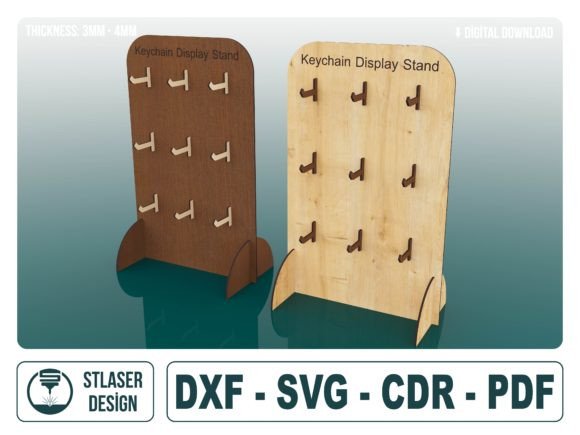
Keychain Display Stand: Laser Cutting for Stands
As someone who has spent years building a digital product shop on Etsy and expanding into creative marketplaces like Creative Fabrica, I approach every new graphic design asset with a critical eye. It is not just about whether a file looks cute; it is about whether it solves a problem for my customers or enhances the perceived value of a physical product I intend to sell. Recently, I evaluated the Keychain Display Stand Laser Cut Svg to see if it fits into my upcoming collection of handmade business tools. My goal was to determine if this asset could serve as a functional commercial design for makers or a visual element for digital bundles.
First Impressions and Niche Appeal
Upon opening the files, the immediate impression is one of utility mixed with modern minimalism. This is not a whimsical, playful illustration meant for nursery prints or greeting cards. Instead, it carries a clean, industrial, and professional mood. The lines are precise, suggesting a design intended for functionality. For a seller targeting the "maker" niche—specifically those running a handmade business selling jewelry, keychains, or small accessories—this asset screams organization and retail readiness.
The visual personality is understated. It does not compete for attention, which is exactly what a display stand should do. Its role is to elevate the product being sold, not to overshadow it. This makes it an excellent candidate for sellers who want to create product mockups that look high-end without needing expensive photography equipment. Whether you are a digital product creator selling templates or a craftier selling physical goods, the aesthetic here is "boutique ready."
Technical Specifications and Material Compatibility
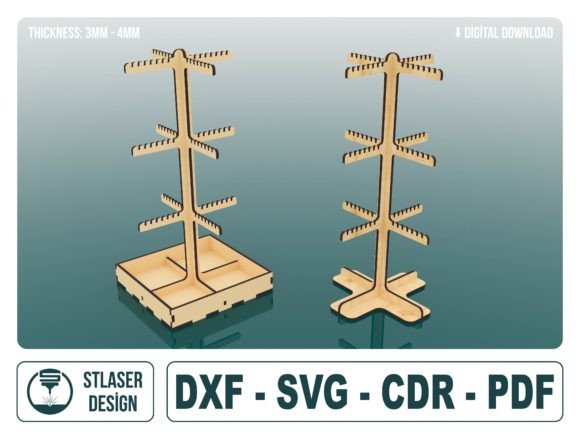
From a technical standpoint, the file preparation is crucial for Laser Cutting projects. The documentation indicates that the geometry is optimized for materials ranging from 3mm to 4mm in thickness. This is a vital detail because acrylic, wood, and MDF behave differently at various depths. A stand designed for 3mm acrylic will have loose joints if cut in 4mm plywood, and vice versa. Knowing these parameters allows me to confidently market this as a reliable SVG design for users with specific material inventories.
The dimensions are approximately 150mm by 150mm for the base footprint, rising to a height of 330mm (roughly 5.9 by 5.9 by 12.9 inches). This verticality is perfect for displaying hanging items like keychains or lanyards. The package includes both DXF (Drawing Interchange Format) and SVG (Scalable Vector Graphics) files. For my workflow, having the DXF is essential for compatibility with older laser software, while the SVG ensures scalability for any Cricut project or vector editing in Illustrator. The clean vector paths suggest that weeding and cutting should be straightforward, minimizing production errors for the end-user.
Real-World Product Applications
So, how does this translate into actual revenue streams? I tested this asset across several potential product categories. First, as a standalone digital download, it appeals directly to owners of laser cutters who need shop fixtures. They are constantly looking for ways to improve their booth displays at craft fairs or organize their inventory photos.
Beyond the physical cut file, I explored its use in social media graphics and brand identity kits. By rendering this stand in a 3D mockup environment, I can create stunning listing images for other products. Imagine placing a vibrant sublimation design keychain on this stand; the resulting image instantly communicates quality to a buyer. It transforms a simple photo into a professional product mockup.
Furthermore, this asset works well within a larger design bundle. If I were creating a "Small Business Starter Kit," this stand could be included as a bonus file for physical product sellers, adding immense value to a package of Canva templates and logo files. It bridges the gap between digital assets and physical retail needs.
Enhancing Product Presentation and Trust
In the crowded marketplace of online selling, visual hierarchy is everything. A cluttered thumbnail kills click-through rates. Using a dedicated stand like this helps isolate the product, creating negative space that draws the eye directly to the item being sold. This clarity builds customer trust. When a buyer sees a product displayed neatly on a custom stand rather than lying flat on a messy table, the perceived value of the item increases.
This is particularly useful for Etsy product listings where competition is fierce. Consistent use of such props across a shop creates brand consistency. It tells the customer that the seller cares about details. For print-on-demand sellers who rely on mockups, incorporating this stand into their scene compositions can differentiate their store from competitors using generic, overused templates.
Where to Use Caution
Despite its strengths, this asset is not a one-size-fits-all solution. It should be used carefully in contexts requiring intricate, tiny details. If a user attempts to scale this down significantly for a sticker design or a small planner embellishment, the structural slots may become too narrow to cut cleanly, especially on desktop die-cutting machines. It is also not suitable for text-heavy layouts; the geometric nature of the stand can clash with busy backgrounds or complex typography.
Sellers must also be mindful of contrast. When using this stand in photography or mockups, placing a dark-colored product against a dark wood version of the stand will result in poor visibility. It works best against neutral or contrasting backgrounds to maintain visual storytelling clarity. Additionally, for those using this as a reference for packaging design, ensure the scale is accurate so customers do not expect a full-sized furniture piece when they purchase a digital file.
Practical Seller Notes for Launch
Before publishing this as part of a creative marketplace listing, I recommend a rigorous testing phase. First, test the design on real mockups to ensure the proportions look natural in a rendered environment. Preview the file as a marketplace thumbnail at a small size to verify that the silhouette remains recognizable. Check how the vector lines appear on both white and dark backgrounds to ensure there are no stray nodes or open paths.
If you are offering this as a cut file, verify the kerf settings in your documentation. Users need to know if they should adjust their laser power for 3mm versus 4mm material. Organize the files clearly in the download folder, perhaps separating the DXF and SVG versions into subfolders labeled by machine type. Pairing this asset with fonts that match its industrial vibe—such as clean sans serif or bold display fonts—can enhance the overall marketing materials.
Finally, always confirm the commercial license terms. As a seller, you need to know if you can sell the cut physical stands, sell the digital file as-is, or only use it for internal marketing. Understanding these boundaries protects your small business branding and ensures long-term viability. With the right strategy, the Keychain Display Stand Laser Cut Svg is more than just a file; it is a tool for elevating an entire product line.